


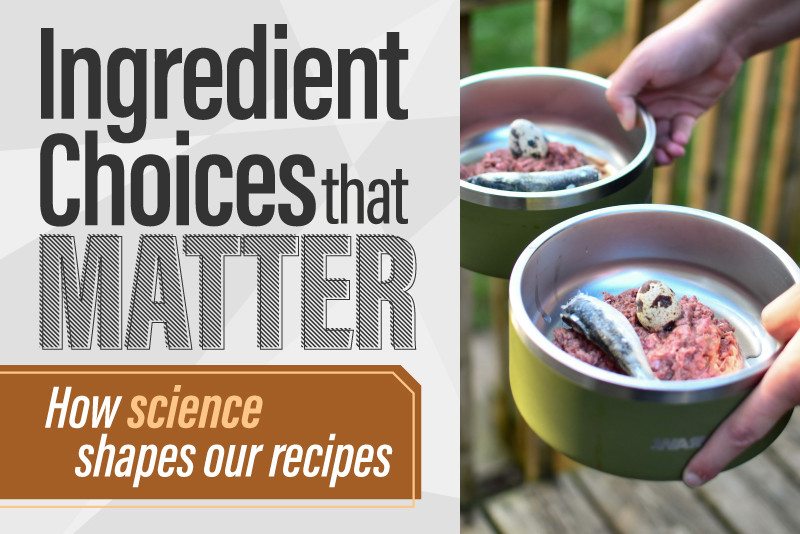
Ingredient Choices That Matter: How Science Shapes Our Recipes
Whether you’re just looking into the benefits of a Big Country Raw diet or your pet has enjoyed our menu for years, our commitment to you and your furry family members remains unchanged: supporting health and longevity through carefully sourced, science-driven nutrition. As health-conscious pet parents switch to fresh, raw diets become more mainstream, the raw feeding industry evolves, and research continues to deepen our understanding of fresh food nutrition. We use this data to guide thoughtful improvements to our recipes because when we make changes, it’s because we believe they move us closer to delivering the absolute best for our pets.
Bioavailability matters
Our aim is to bring as much nutrition as possible from fresh, whole food ingredients and this is where ingredient selection matters.
To illustrate, let’s compare the zinc content of pork liver and beef liver. While both are considered excellent sources, pork liver contains up to 8mg per 100g, compared to beef which has between 4-6 mg per 100g. Pork liver also contains more selenium and iron than beef. The use of pork liver means recipes can rely less on chelated minerals to meet nutritional requirements.
Following along using the same example, liver should not be the only source of zinc in a raw food recipe because liver is also very high in vitamin A. Organs like liver are nutrient dense, but liver should make up no more than 5% of a dog’s diet to reduce the risk of hypervitaminosis A (Vitamin A toxicity).
They say: “The dose makes the poison” so we use vitamins and minerals to bridge the gap between deficiency and toxicity. The most commonly used zinc supplement in commercial pet food manufacturing is zinc oxide – it’s inexpensive but also has low absorption. The danger here is that on paper, the recipes may be “complete and balanced”, but bioavailability is poor, and ultimately the nutrient just passes through with no benefit.
Our Dinner and XL recipes contain chelated organic minerals in the form of a specific amino acid and peptide blend. This is important because in this form, the nutrients are highly digestible and protected from interacting with other nutrients the food contains. Specifically, we use Zinc proteinate, Manganese proteinate, and Copper proteinate – three essential nutrients not readily found in meat or plant products in concentrations necessary for balanced nutrition.
A ratio diet (eg. 80/10/10) containing only meat, bone, organ meats, and fruits and vegetables requires targeted supplementation to be nutritionally complete. Creating complete and balanced recipes for our pets is more than nuance or “balance over time” – it’s science. Knowing the nutritional content and adequacy of any single ingredient is just the beginning - bioavailability, interactions, and the effect on the resulting recipe is the only way to ensure nutrient minimums are being met and safe upper levels aren’t exceeded. This is precisely why our Pure Formulations require supplementation with Thrive Fortify or FortifyRX – these supplements were designed to fill the nutritional gaps of pure, Big Country Raw single protein diets.
We have made some changes to our recipes recently. We have broken down below what changed and what has stayed the same.
DINNER Recipes
What stayed the same?
- Recipes continue to be multi-protein recipes.
- Fruit and vegetable ingredients are unchanged: cranberries, spinach, broccoli, zucchini, and blueberries.
What changed?
- Replaced beef heart with pork heart in some recipes. Chicken Dinner, Turkey Dinner, and Lamb Dinner remain pork-free.
- Fruit and vegetable blend remains the same, with minor changes to amounts – changing the ingredient listing order.
- Addition of Cod Liver Oil for Vitamin D in all recipes
- Addition of marine algae for DHA, an essential source of omega-3 fatty acids in all recipes.
XL Recipes
What stayed the same?
- Recipes continue to include multiple proteins
- Recipes continue to have an extremely low-glycemic index (GI) rating of less than 4. A traditional low-GI canine diet should have a GI of less than 55.
What changed?
- All recipes contain pork liver rather than beef liver.
- Updated fruit and vegetable blend: zucchini, spinach, green beans, and cranberries, has become carrots, green beans, cucumber, spinach, and cranberries.
Cucumber as a source of Vitamin K and carrots for beta-carotene. - What hasn’t changed: we want to ensure that quality raw food is affordable for Canadian pet parents.
The fruit and vegetable changes in the XL recipes were driven by considering their nutritional profile and market supply. Cucumber and carrots are some of the most consumed vegetables in Canada. Carrots are a low-calorie, low-glycemic vegetable rich in phenolic compounds that support liver health and provide antimicrobial benefits. Replacing zucchini with cucumber, supported by a secured ongoing supply of locally sourced cucumbers. Cucumbers offer a light, low-calorie base with natural antioxidants that support digestion, immune health, and overall wellness.
Why are these changes important?
You can see there is much to consider when we make recipe / ingredient changes, and these updates are made so that we can continue to make feeding a quality raw diet affordable while prioritizing the long-term health of our pets. Most of our Dinner and all XL recipes have always been multi-protein recipes. The most recent change has been to swap some of the beef organs (liver, spleen, kidney) and heart for pork - Chicken Dinner, Lamb Dinner, and Turkey Dinner remain pork-free.
Notable is that Pure recipes are single-protein options for pets that may be sensitive to specific proteins and Lamb Dinner and Pork Dinner are two recipes that remain single-protein.
In addition to the difference in zinc content, pork heart is leaner with a similar nutritional profile to beef, bringing down the fat content.
Recipe variety lends to more variety in the diet. This keeps our pets interested in their meals and supports better nutrition and protein rotation which are both important for our pets.
The case for pork
The price of beef in Canada is at an all-time high. Cattle farmers responded to droughts in the west by drastically reducing herd sizes, operational costs for feed, transportation, and labour are the highest they’ve ever been, and the demand for Canadian beef is North America-wide with a large portion being exported to the United States.
Pork is more readily available. Cattle have 1 calf per year (1 heart, 1 liver, 1 spleen). Pigs, however, can have 2-3 litters per year with 8-14 piglets per litter – that’s a lot more pork than beef!
Conclusion
Ultimately, the goal of any recipe changes we make is to deliver better nutrition where it matters most - through highly bioavailable, whole-food ingredients. From the naturally rich mineral profile of pork organs, and vegetable substitutions for added fibre and essential nutrients, this change supports balanced nutrition, protein rotation, and improved meal variety for pets. It also reflects a thoughtful response to ingredient availability and sustainability without compromising quality or affordability. Every update we make is guided by science, transparency, and what’s best for the long-term health and longevity of your pets, and ours. Changes are never a shortcut, they’re smart, intentional choices that help us continue to raise the standard for raw nutrition.
Recent Posts
-

Canada’s Leading Raw Pet Food Brand Expands into the United States
(SMITHVILLE, ON, CANADA) Big Country Raw, Canada’s leading raw pet food brand, has partnered with Fr
-

Stay a Little Longer: Why Healthspan Matters for Our Pets
We all wish for the same thing when we look at our pets curled up beside us or greeting us at the do
-

Big Country Raw Launches “Stay A Little Longer” Campaign and Enhanced Meal Planning Tool
(SMITHVILLE, ONTARIO) Big Country Raw, Canada’s leading raw pet food brand, has launched its new bra