


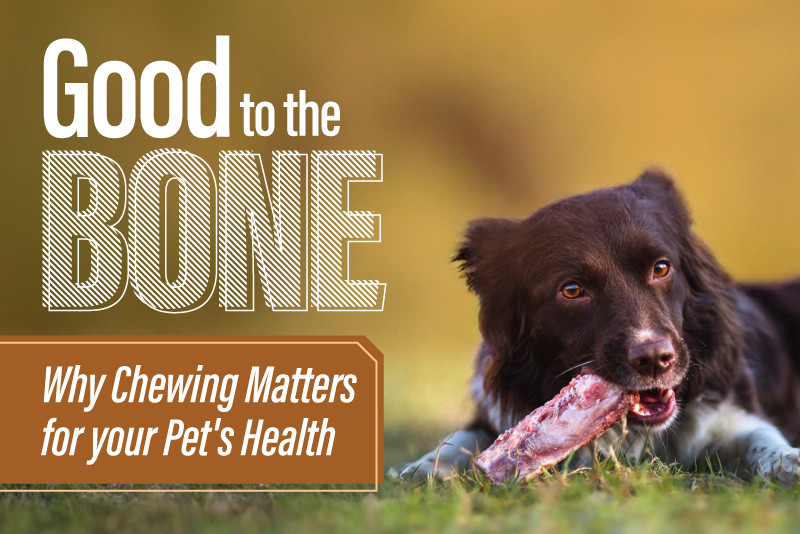
Good to the Bone: Why Chewing Matters for Your Pet’s Health
Dogs and cats love to chew – it’s natural, deeply satisfying, and actually really good for them. Feeding bones isn’t just a tasty treat - it supports your pet’s behaviour, dental health, and overall nutrition in a way very few things can. The best part? Bones make a great addition to the menu, no matter their current diet. Keep reading to discover why bones matter, how they can improve your pet’s health, and the safest way to feed them.
Benefits of Bones
Improved Mood & Behaviour
Chewing releases dopamine, the “feel good” hormone. That means working on a bone can help pets relax, burn off stress, and stay mentally engaged. It’s one of the easiest ways to fight boredom and provide natural enrichment. Bones make an excellent reward and can help encourage calm, content behaviour at home.
Dental Health
The natural action of chewing and crunching helps scrape away tartar and massage the gums. Studies show chewing bones can reduce dental calculus by up to 82% in just 12 days.
A cleaner mouth also means fewer harmful bacteria that can travel through the bloodstream and affect the heart, kidneys, and other organs.
Even dental kibbles can’t clean teeth the way bones do. Kibble carbohydrates feed plaque bacteria, while bones physically scrape the teeth and support a healthier mouth.
Joint support
Bones that include cartilage, tendons, and ligaments naturally contain glucosamine and chondroitin, two nutrients known to support joint health and mobility.
Nutrition
Bones provide natural support for a healthy gut microbiome and are rich in trace minerals like zinc, selenium, magnesium, and many other nutrients that benefit the whole body. Collagen and connective tissue support joint health, while the calcium and phosphorus help to keep bones and teeth strong.
Meal Bones vs. Recreational Bones
Meal bones are softer and meant to be eaten entirely. They can replace part, or even all, of a raw meal (just swap equal weight). They’re great for pets of all ages, especially puppies, kittens and seniors, and they do an excellent job cleaning teeth.
Recreational chew bones are suited more for dogs as they are very dense and meant for gnawing, not fully eating. They’re fantastic for mental enrichment and dental health, but they’re best for moderate chewers. Super aggressive chewers and senior dogs with fragile teeth may need softer options.
Weight-bearing bones (like femurs/marrow bones) fall into this category and should never be given to voracious chewers, as they can crack teeth.
Frozen or Thawed?
Frozen bones are convenient, last longer, and can help slow down fast eaters. Feeding bones frozen can be a lifesaver when there’s no raw thawed.
Thawed bones are easier to chew, and are often better for picky eaters or senior pets. A thawed bone has a stronger aroma, which can draw in a hesitant eater.
Safety First
Some pets need to learn how to chew properly. Holding the bone at first can help encourage gnawing instead of gulping. Dogs that tend to swallow food whole, and brachycephalic breeds, may not be good candidates for bones. You know your dog best, select a bone that you are confident they will chew safely.
And always remember: big bones for big dogs and small bones are for small pets, never feed cooked bones and always supervise your pet with bones.
Chew on This: The Takeaway
Bones are one of the simplest ways to support your pet’s mental wellbeing, dental health, and nutrition, while giving them something they truly love. With the right bone, the right supervision, and the right fit for your pet, bones can be a powerful part of a healthy routine.
https://onlinelibrary.wiley.com/doi/abs/10.1111/avj.12394
Recent Posts
-

Canada’s Leading Raw Pet Food Brand Expands into the United States
(SMITHVILLE, ON, CANADA) Big Country Raw, Canada’s leading raw pet food brand, has partnered with Fr
-
Stay a Little Longer: Why Healthspan Matters for Our Pets
We all wish for the same thing when we look at our pets curled up beside us or greeting us at the do
-
Big Country Raw Launches “Stay A Little Longer” Campaign and Enhanced Meal Planning Tool
(SMITHVILLE, ONTARIO) Big Country Raw, Canada’s leading raw pet food brand, has launched its new bra